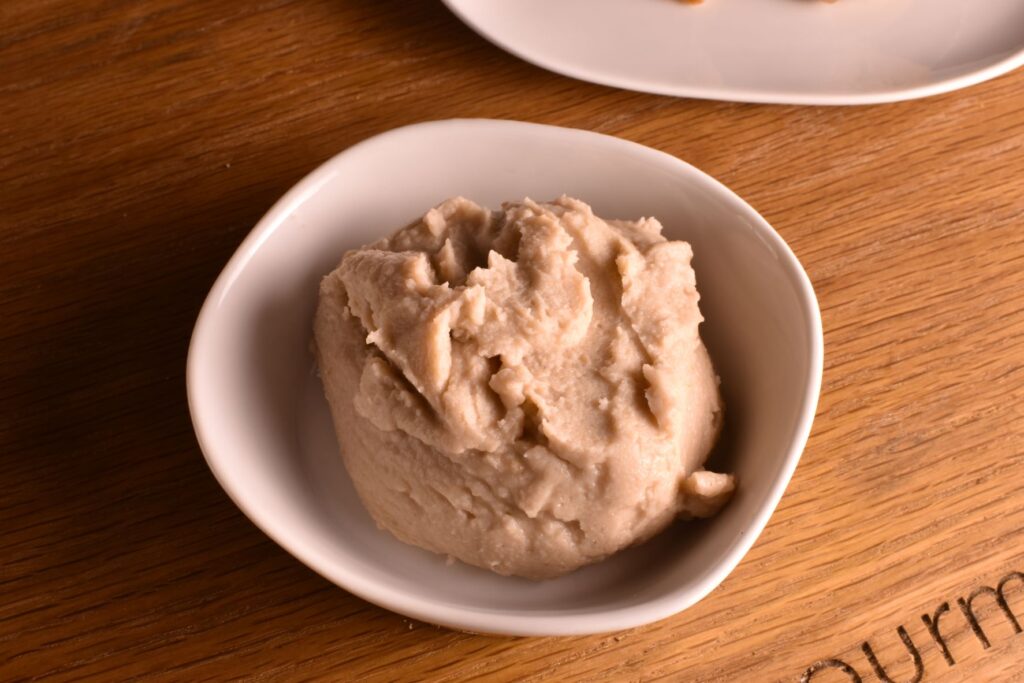

A basic preparation to be used for chestnut creams, mousses, vermicelli etc.!
ingredients (total cost about 3,5 € for 500 g of made puree with organic ingredients)
- 1 part chestnuts (weighed after they are peeled, ideally marroni)
- 1 part full fat milk + more to add, if needed
- sugar, according to taste (I use 8-10%)
- a pinch of salt
I have never understood what exactly chestnut is. Is it a fruit, is it a nut, is it a seed? How do we categorize it? Well, what I know for sure is that it is one of the most used and versatile autumn and winter ingredients in pastry preparations. Indeed, it can be made and used in numerous ways to garnish luxurious cakes, tarts and desserts.
During my childhood, I remember myself counting the days each year, until the time to go to our chestnut trees estate, in my home village at Karpenisi, to collect the annual harvest. It was a magical ritual. Grandma was preparing food and bread from the previous day and my sister and I were helping her. All morning we picked chestnuts and at noon, exhausted yet pleased, we would rest by the river and have lunch.
I did not know much about confectionery then, nor could I imagine the many possible uses of chestnuts, but I had already cultivated a love for these wonderful gifts of the earth, that I still hold in my heart. Unfortunately, our trees got sick years ago and we no longer have them. So, now I have to buy chestnuts. You can find advise on how to best choose, store and consume chestnuts in our DG Bible.
Each autumn I literally buy tenths of kilos of them, to make my year’s basic chestnut preparations. One of these preparations – the most basic – is the chestnut puree.
The chestnut puree allows us to flavor with chestnut and add texture to cream fillings and toppings, whipped cream bases, mousses, vermicelli toppings etc. It can be made with or without sugar, according to the intended use. If, for example, we want to use it to make vermicelli for the topping of our desserts, it needs to be sweetened. But if we want to add to previously made preparations, that are already sweet, then we can make it without sugar, so as not to change the final sweetness of the product. It is made with milk, but if no milk is available it can be perfectly made with water, instead.
To make it we begin by peeling and cooking the chestnuts. We wash the chestnuts, make a cross in the flat part of each chestnut (or a cut against the grain on both sides) with the blade of a small knife. This will allow the internal moisture escape in the form of steam, and eventually help us to easily peel them. Then we place them in a saucepan, cover them with water and cook for about 10-15 minutes. We lower the heat to a bare shimmering, just to keep the chestnuts warm and take one chestnut at a time to peel it. This way, the others will remain warm – which is actually what makes peeling easier.
To also remove the inner skin, the warming of the unpeeled chestnuts is not always enough. Especially when the room temperature is cold, by the moment we peel the outer part, the chestnut will have already cooled enough to make it difficult to do the job. Therefore, it is advisable to have a second small saucepan ready with hot water, and after peeling the outer skin of each chestnut, throw it inside the second saucepan for a few minutes to rewarm it. When chestnuts are rewarmed, we repeat the same procedure to deprive all of them of their inner skin, as well.
After we have perfectly peeled all chestnuts, we weigh them, put them into a saucepan and cover them with equal weight of milk. We add a pinch of salt and about 8-10% the chestnuts’ weight in sugar (if using) and cook at low heat (partially covered with a lid), until they are completely soft.
We can check if they are ready, by pressing a chestnut on a plate with a fork. If it dissolves easily, it is ready. It we take about 20 – 40 minutes or maybe more, depending on the dryness of the chestnuts (if they are fresh enough – which is better, of course – they will not be that dry, so they will not need much time). If necessary, we add more (warm always) milk during cooking to keep them covered.
Once the chestnuts have softened enough, we let them cool a bit and then we strain them with a sieve, keeping the milk. We then mash them with a potato masher, pass them through a sieve to eliminate eventual lumps and take a smooth velvety puree, which we collect in a bowl. If the puree turns out too thick for the intended use, we add a little of the kept milk, and beat the puree with a fork or a whisk, or in the stand mixer fitted with the paddle attachment for a few minutes to smoothen it. We continue adding milk (or water) little by little, until we reach the desired consistency.
We keep the puree in a glass jar sealed with a lid, or in a bowl covered with cling film, if we intend to use it soon, either way in the refrigerator.