I prepare focaccia at home once or twice a week, so sometimes I make some extravaganzas to break the routine
ingredients for 2 focaccia of 500g (total cost about 3,5 Euro with organic flours)
- 250 g flour from hard wheat
- 250 g flour from soft wheat
- 400 ml mineral water
- 10 g salt
- 4 g dried yeast
- 20 g sugar
- 60 ml EV olive oil + 20 ml for garnishing
- black sesame
- fresh rosemary
- one medium onion
- paprika de la Vera
- coarse salt
I can prepare focaccia even blind, I have made thousands in my life, touching the dough I can understand if it is well hydrated, well oiled and well risen.
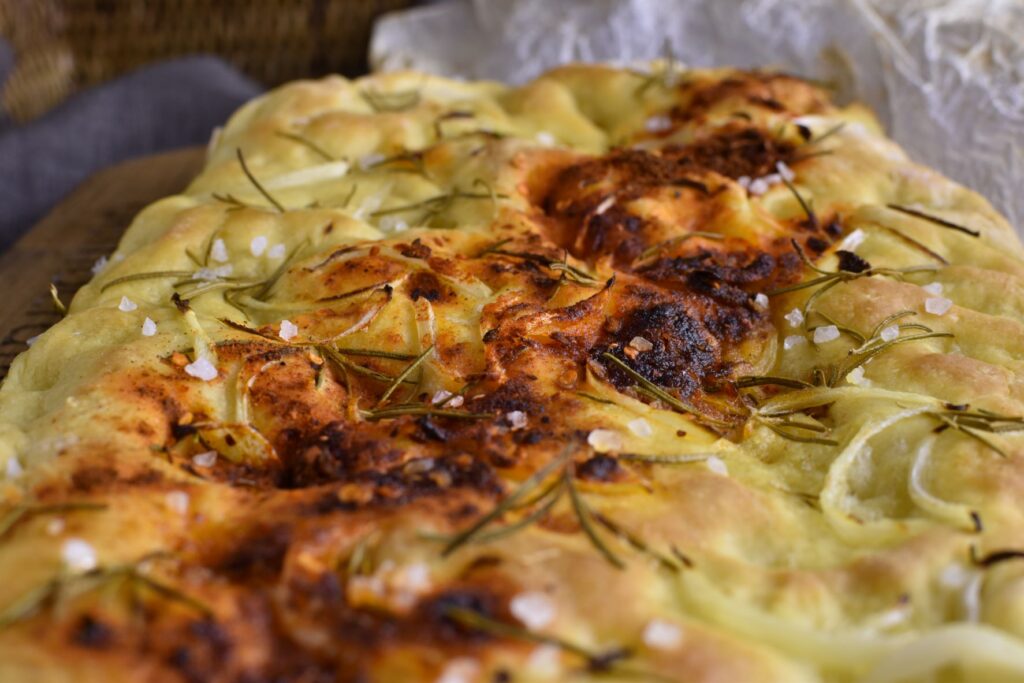
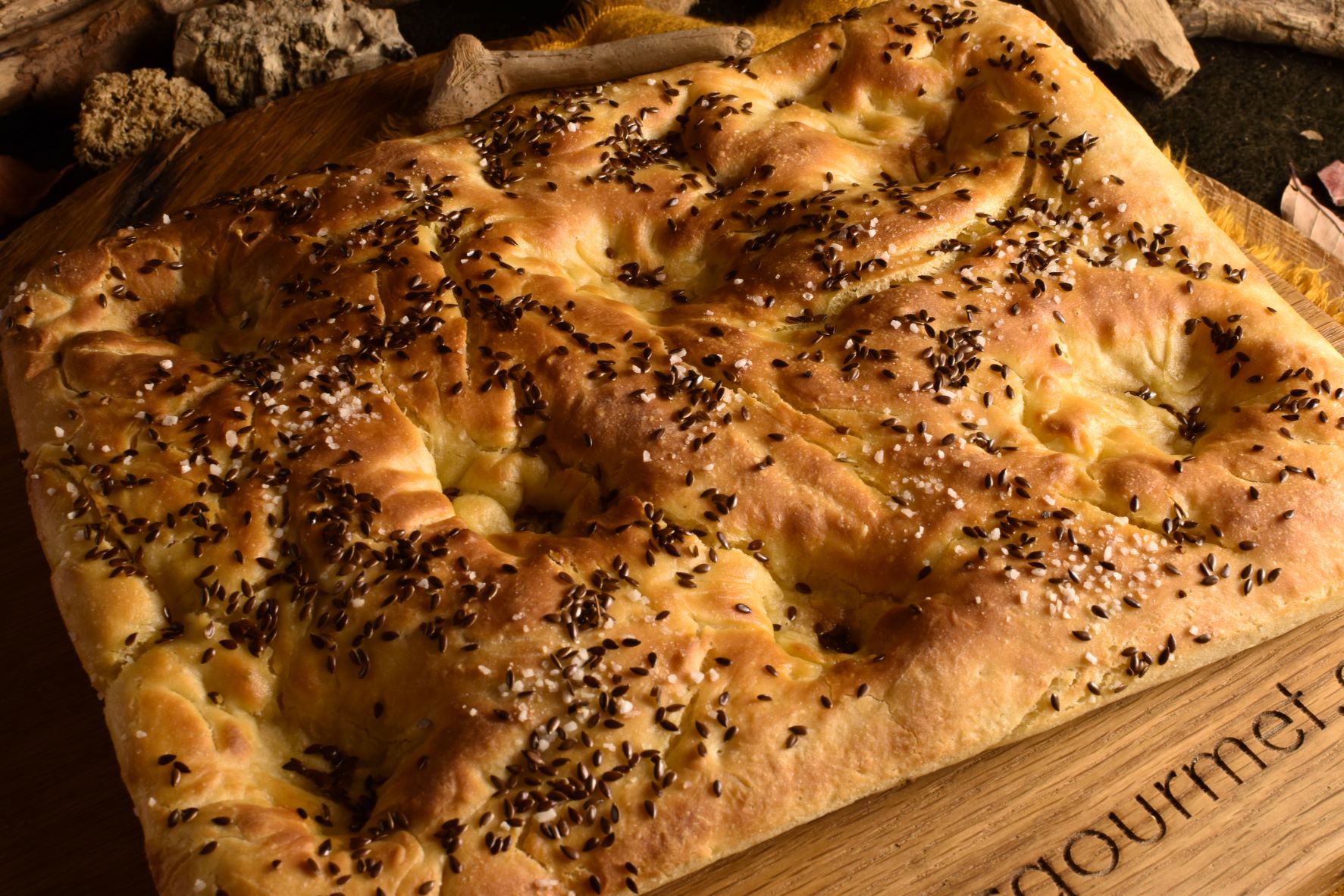
Today, I present you two different focaccias, the one Spanish style with paprika de la Vera and onion and the other with a technique that provokes a different but also interesting result confronting with the original.
We follow the classic procedure for all focaccias, so:
We start by sifting the flours and stirring them with the yeast and the sugar. We add the water and the salt and we start kneading the dough by hand, or even better we put all the ingredients to a mixer bowl.
We knead in the stand mixer fitted with the hook attachment for 7 minutes in low speed and 7 more in medium. We add the oil and we knead for 2 more minutes. We cover the bowl with film and we wait for 30 to 45 minutes, depending on the room temperature and having in mind that, ideally, this should be around 23 Celsius degrees.
After the first quick half-hour rising, we spread the dough in two baking sheets covered with parchment paper and very well oiled. The amount of the dough for each baking sheet can be found by multiplying the length by the width and then dividing by 2.4. So, for a common baking tray 40 cm X 30 cm = 1,200 / 2.4 = 500 grams of dough.
We flatten the doughs by hand, trying to cover the largest possible part of the sheets. We sprinkle a little flour on their surface so that they do not stick and we leave them to mature for 3 hours, covered by a damp cloth.
After this time:
a) We dip our fingers in flour and we make the classic “holes” in the dough of the first focaccia. We also add over this dough the onions, thinly sliced and we press them slightly to submerge them a bit in the dough.
b) At the second focaccia, instead of making holes with our fingers, we push the dough hard with the heel of our hands trying to create bigger and deeper wholes. This variation creates an extra texture contradiction and a crunchier dough at the pressed points than the classic focaccias.
We cover with a cloth and let them rest for 40 minutes.
Meanwhile, we preheat the oven to 250 C degrees, we drizzle the focaccias with oil and sprinkle with the coarse salt. At the first focaccia we also add rosemary and paprika and at the second one black sesame.
We bake for 6 to 10 minutes, depending on the oven and our taste.
We wait for them to cool completely and we eat them immediately or we store them in an airtight package for a few hours. Focaccia must be eaten the same day.