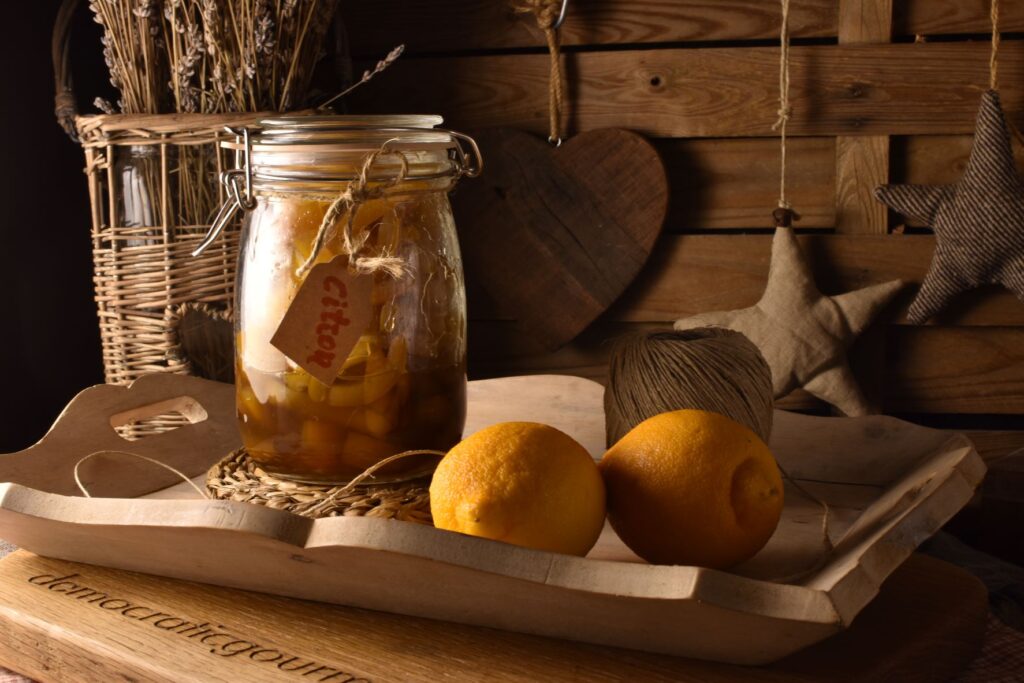

A traditional gesture of genuine Greek hospitality!
ingredients for a jar of sweet (total cost about 4€ with organic sugars)
- 500 g citron peels (weighed after they are blanched and well strained)
- 750 g water
- 500 g sugar
- qualche goccia di limone
In Greece, as well as other Balkan and Middle East countries, there is a category of sweets, called spoon sweets (γλυκά του κουταλιού).
Spoon sweets, are normally made from fruit, cooked in a sugar syrup, in a way that ensures that the fruit retains its original shape, color, aroma and taste. They can be made from almost any fruit, yet, bitter fruits, such as citron, bergamot, kumquat, bitter orange, or sour fruits, like the iconic sour cherry spoon sweet. There are also spoon sweets produced without fruit, as in the case of the rose spoon sweet, which is made from rose petals, as well as spoon sweets, made by fresh nuts. Walnut, is my favorite.
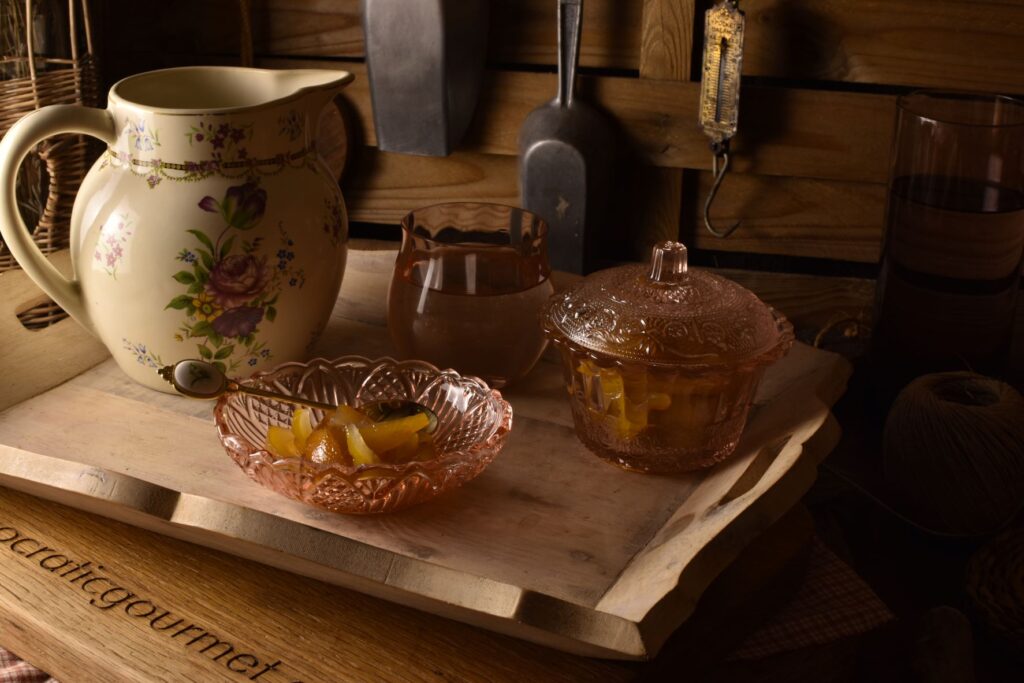
In Greece, spoon sweets are usually offered to guests in a small crystal dish, accompanied by a glass of cold water (since most Greeks make them extremely sweet) and, some times, coffee and it is considered by us Greeks as a gesture of hospitality. Nevertheless, they can also be used as a topping to ice cream or yogurt or any sweet cream, or even to accompany cheese.
One of my favorite fruits to make spoon sweet are the citrons. I love their bitterness and their excuisite aroma. What is more, because of the fact that they have a thick white part, they have the abbility to absorb, just like a sponge, a large amount of syrup, making them incredibly soft and juicy.
To make it, it takes patience, but – I assure you – the result will reward you!
So, we begin by washing the citrons and we carefully peel them into 1,5 – 2 cm vertical stripes, making sure to take all the white inner part, which we need, as already mentioned, to absorb the syrup and distribute it to the whole peel.
We soak the peels in plenty of water for a a couple of days, changing the water 3-4 times each day. This will help soften the fruit peels and remove most of their bitterness, coming from their inner white part. Two days later, we strain the peels and we proceed to a single blanching, in order to get rid of the eventual remaining bitterness, as well as to soften them a little more.
So, we cover them with water, we bring to a boil and we let them cook for about 5-10 minutes, according to their initial bitterness, hardness and thickness. We rinse them under plenty of water, we let them strain very well and then we weigh them. Then we measure the same weight in sugar and 1,5 times their weight in water. We place water and sugar in a pot and we gently heat them, while stirring. As soon as the sugar dissolves completely, we add the citron peels, very well strained, and we gently bring them to a boil stirring from time to time. We let them cook for 10 more minutes, until the syrup has slightly thickened, but remains runny.
Then we turn off the heat, we cover the pot with a lid and we let the peels steep inside the syrup, until they cool completely. After that we place the pot to the fridge overnight. Make sure that the peels are well covered by the syrup. If necessary place on top a plate to keep them submerged.
The next day we remove the pot from the fridge, we uncover it, we return it to a gentle heat and we give another boil to our preparation. We let it boil gently counting 3-4 minutes after it reaches the boiling point, then we turn off the heat, we cover again with a lid, we let cool completely and we return the preparation to the fridge, until the next day.
By the next morning, they must have already become soft enough. We taste them to check. If not, we repeat the procedure as already described. Otherwise (that is, if they are already soft enough) we remove the peels from the pot and boil the syrup alone. We do this, because, if we continue to let the softened peels inside the syrup while we heat it, they will start falling apart. We do not want this. We want them to hold their shape.
So we gently boil the syrup alone, until a little of its water evaporates and it thickens a little more. Then we return the peels inside the syrup and let them cool again completely. We keep them in the fridge overnight. We repeat this procedure, until the citron peels become shiny and their inner spongy white part, almost transparent.
Once this happens, we remove the peels for one last time, we let them strain very very well and, meanwhile, we boil the syrup for once again, but this time we let it reduce and thicken very very much and loose most of its moisture. In the end it should look like a moderately runny honey and when we pinch it between our two fingers, they should almost stick to each other. When ready, we add a few lemon drops to prevent the syrup from crystalizing.
We let the syrup become lukewarm and then we add the peels, turning them all over to be completely covered by the thick syrup. We continue stirring every hour during the whole day, so that the peels are always covered by syrup. Normally, the whole procedure after the blanching takes 4-5 turns of boiling the syrup and immerging the peels inside it to steep.
We transfer the citron to an airtight glass jar along with its syrup and keep it in the fridge. Every know then we give the jar a shake, or, even better we stir the peels inside it, so that they are always covered by syrup and they do not dry out. We can even keep the jar inside out. This way, the fruit we are going to consume every time will be soft, as it will be inside the syrup.